3 Questions Every Applicant Forgets to Ask About Fees 💳💸🛂⚠️
When calculating the cost of a visa, most applicants look only at the headline figure published on an embassy portal—such as €90 for a Schengen short-stay visa or $185 for a US B1/B2 tourist permit. They budget precisely for that baseline sum, assuming it represents their total financial obligation.
In practice, headline consular numbers rarely reflect the actual out-of-pocket cost. Between mandatory commercial handling fees, dynamic foreign exchange rate markups, biometric transmission surcharges, and non-refundable health levies, applicants routinely experience unexpected financial shortfalls right at the intake desk.
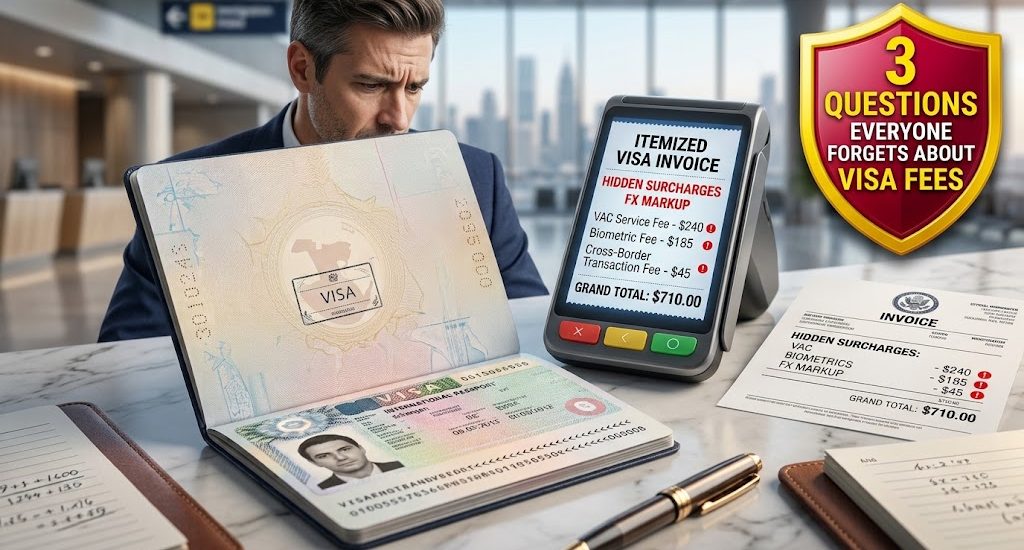
Before booking your appointment or submitting your digital payment, these are the three critical questions every applicant forgets to ask about fees—and how answering them in advance will safeguard your budget.
1. “Is This Base Consular Fee All-Inclusive, or Will Facilitation & Biometric Surcharges Apply?”
The single largest misconception in international visa filing is assuming the consular processing fee covers the physical appointment and processing infrastructure.
- The Hidden Reality: Foreign ministries across Europe, the UK, Canada, and Australia outsource primary document intake, security screening, and biometric enrollment to third-party concessionaires like VFS Global, TLScontact, or BLS International.
- The Unbudgeted Costs:
- Mandatory VAC Service Fees: Booking your slot frequently requires paying an administrative facilitation fee ranging from $25 to $45 on top of the government fee.
- Biometric & Transmission Charges: For countries like Canada, biometrics require a dedicated fee (CAD $85), while passing physical passport files between visa application centers and processing hubs incurs package transmission fees.
- Add-On “Convenience” Traps: Intake desks routinely nudge applicants toward premium lounge access, SMS notifications, courier pass-backs, and document scanning services that can inflate counter bills by $50 to $150+.
- The Practical Fix: Never budget solely for the government statutory fee. Check your country’s designated Visa Application Centre (VAC) fee schedule and factor in at least $50 to $80 per applicant in mandatory operational handling expenses.
2. “What Is the Embassy’s Internal Exchange Rate and Local Payment Channel?”
Even when a visa fee is legally defined in US Dollars (USD), Euros (EUR), or British Pounds (GBP), you rarely pay that exact figure in real terms.
- The Hidden Reality: Consulates and their booking engines enforce fixed internal exchange rates (consular conversion rates) that are adjusted periodically, rather than reflecting live interbank market mid-rates. In developing economies experiencing currency shifts, embassy rates are frequently marked up 5% to 15% above standard bank conversion rates to buffer against volatility.
- The Transaction Cost Trap:
- Foreign Transaction Markups: Paying an overseas portal using a local domestic credit or debit card triggers an automatic cross-border transaction fee (typically 1.5% to 3.5%) plus local withholding or sales taxes.
- Rigid Cash-Only Mandates: In several South Asian, African, and Middle Eastern intake centers, third-party desks mandate exact cash payments in local currency notes, refusing digital cards or bank drafts. Arriving without exact change can force you to use unfavorable retail currency exchange counters near the terminal.
- The Practical Fix: Review the embassy’s specific local-currency payment circular for the current calendar month. Confirm whether fees must be paid online via international card or physically in cash at the counter, and budget a 10% cash buffer above the base conversion rate.
3. “Are Ancillary Charges (Health Surcharges & Guarantees) Refundable If the Visa Is Refused?”
Applicants often assume that if a visa is rejected or withdrawn, paid fees are returned. In the immigration ecosystem, the refund architecture is fragmented.
- The Hidden Reality: Baseline visa application fees are statutory administrative assessment costs; they are universally 100% non-refundable regardless of outcome. However, high-value auxiliary charges follow distinct legal rules:
- Immigration Health Surcharge (IHS): For UK student and work visas, the mandatory healthcare levy (running hundreds of pounds per year) is legally refundable if your application is refused.
- Financial Security Deposits: Under exploratory frameworks like the UAE Job Seeker Visa, the mandatory AED 1,000 guarantee is recoverable upon departure or internal status change, but application handling and processing charges are forfeited.
- Third-Party Appointment Fees: Concessionaire booking fees are generally non-refundable once an appointment slot is allocated or missed.
- The Practical Fix: Maintain a distinct ledger separating non-recoverable processing fees from recoverable statutory bonds. Always retain your original digital payment receipts, application tracking codes, and merchant settlement proofs; without them, initiating an administrative refund claim for health levies or security deposits is virtually impossible.
Cost Breakdown Matrix: Headline Fee vs. True Out-of-Pocket Expense
| Expense Layer | What the Applicant Expects | The Actual Expense at Lodgment | Refundability Status |
| Statutory Government Fee | Stated portal price (e.g., €90 / $185) | Stated price converted at embassy internal exchange rates | Non-Refundable |
| VAC Handling / Biometrics | Assumed included | $25 to $85+ per applicant (VFS/TLS/BLS fees) | Non-Refundable |
| Bank / Card Processing | $0 | 1.5% to 3.5% cross-border bank charge + withholding tax | Non-Refundable |
| Mandatory Health Cover / Levy | Often overlooked until the end | $50 to $1,000+ (MOPH, UK IHS, or Incoming Expat cover) | Refundable on Refusal (Varies by country) |
| Document Notarizations / Translations | Assumed negligible | $100 to $300+ for sworn translations and MOFA stamps | Non-Refundable |
Strategic Pre-Payment Protocol
Before clicking “Submit Payment” or heading to the intake center, follow these four financial preparation steps:
- Read the VAC Service Menu in Detail: Verify which services are mandatory (biometric intake, file handling) and proactively deselect optional up-sells like courier insurance or premium seating.
- Verify Merchant Currency Requirements: Confirm whether the payment gateway bills in USD, EUR, or local currency, ensuring your banking card is authorized for international e-commerce transactions with sufficient daily spending limits.
- Secure Written Payment Receipts: Obtain physical or digital, stamped transaction receipts from both the government portal and the VAC desk for every payment tier.
- Budget an Extra 25% Contingency: Allocate a 20% to 25% contingency buffer over the base consular fee to absorb administrative levies, photo compliance updates, and foreign exchange discrepancies.
Strategic Advisory & Corporate Mobility Cost Control
Structuring cost-effective international executive deployments, managing large-scale visa fee budgeting, and auditing consular expenditure across global jurisdictions requires precise procedural planning. Multinational enterprises, corporate mobility teams, and business executives seeking comprehensive compliance advisory can consult Mansory Consultancy.
📌 Important Notice: Fee schedules, statutory surcharges, and consular exchange rate valuations are subject to unannounced revisions by sovereign immigration ministries. Always consult the official consular mission portal and authorized application center price list on the day of filing.