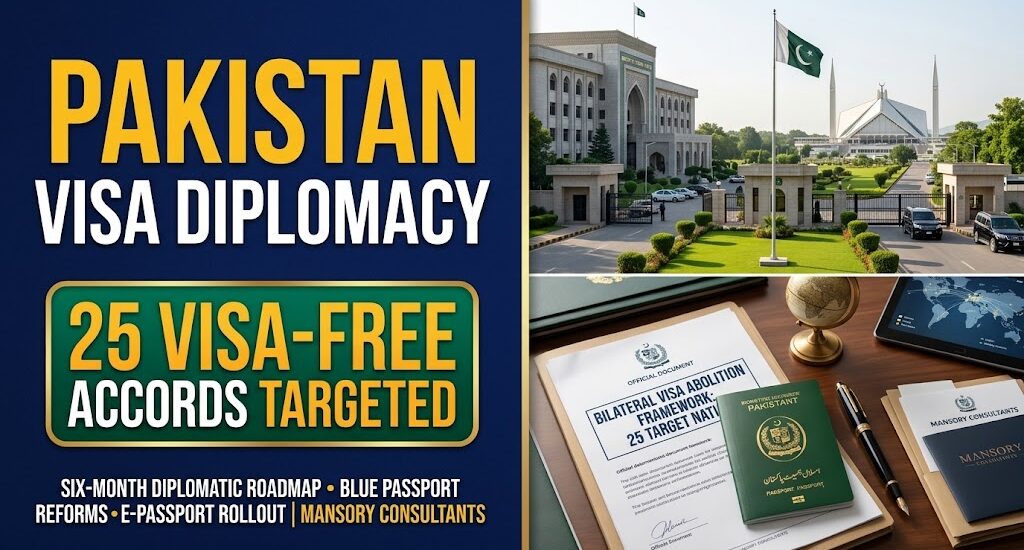
In a major strategic policy initiative aimed at strengthening global diplomatic ties and improving international mobility for Pakistani citizens, Federal Minister for Interior Mohsin Naqvi has announced that Pakistan aims to finalize bilateral visa-free entry arrangements with 25 partner countries over the next six months.
Delivering an exhaustive policy briefing before the National Assembly Standing Committee on Interior in Islamabad, the Interior Minister laid out the government’s multi-pronged strategy to enhance the global standing of the Pakistani passport. The strategic framework combines high-level bilateral diplomatic negotiations with sweeping internal document security reforms—most notably a decisive crackdown on official blue passport misuse, the cancellation of 22,000 irregular official travel documents, and the phased nationwide transition toward next-generation biometric e-Passports.
                 [Pakistan's Global Mobility & Passport Upgrade Strategy]
                                             │
        ┌────────────────────────────────────┼────────────────────────────────────┐
        ▼                                    ▼                                    ▼
[Bilateral Visa Abolition Accords]    [Passport Integrity Reform]          [Biometric e-Passport Rollout]
• 25 Accords Targeted in 6 Months     • 22,000 Blue Passports Cancelled    • Complete transition to e-Passports
• Saudi Arabia & UAE finalized        • Cap established: 70,000 down to 25k• Integrated microchip architecture
• Qatar accord in final phases        • Reissuance restricted to MPs only  • ICAO-compliant digital credentials
• Kenya, Switzerland & Italy advanced • Eliminates foreign consular doubts • Elevates international border trust
1. The 25-Nation Diplomatic Push: Status of Bilateral Accords
The Ministry of Interior, coordinating closely with the Ministry of Foreign Affairs (MoFA), has divided the diplomatic negotiations across distinct geographic tiers:
- Gulf & Middle Eastern Core: The minister confirmed that formal visa-free arrangements with Saudi Arabia and the United Arab Emirates have already been successfully concluded, covering official and diplomatic categories, while a comprehensive reciprocal accord with Qatar is in its final drafting stages.
- European and African Frontiers: Bilateral agreements with Switzerland, Italy, and Kenya are actively approaching their final stages of procedural sign-off.
- Broader 25-Country Objective: Over the forthcoming 180-day operational window, Pakistan’s consular desks are accelerating negotiations across Central Asian republics, Latin America, Southeast Asia, and African partners to secure mutual visa waivers, visa-on-arrival facilities, and expedited electronic entry clearances.
2. Resolving the “Blue Passport” Crisis: Restoring Institutional Credibility
A primary structural barrier previously hindering Pakistan’s visa abolition negotiations was the unregulated proliferation of official (blue) passports. International immigration authorities and foreign interior ministries had repeatedly expressed serious concern over the sheer volume of official passports issued to non-entitled individuals, retired functionaries, and third parties.
To address these international concerns, the Ministry of Interior enacted firm corrective measures:
- Immediate Revocation of 22,000 Passports: The government has officially cancelled 22,000 unauthorized blue passports, revoking travel privileges for individuals who did not meet strict statutory entitlement criteria.
- Slashing the National Ceiling: International partners indicated that Pakistan’s official passport pool—which historically exceeded 70,000 active documents—must be trimmed to approximately 25,000 to eliminate administrative fraud and establish strict consular trust.
- Strict Constitutional Term Limits: Moving forward, official blue passports will be issued to serving Members of the National Assembly (MNAs) and Senators strictly for the exact duration of their constitutional tenure, after which the credentials expire and must be surrendered.
                 [The Restoration Pipeline: From Blue Cap to Green Mobility]
                                             │
                                             ▼
               [Phase 1: Revocation of 22,000 Irregular Blue Passports]
            (Addressing Foreign Border Warnings & Consular Objections)
                                             │
                                             ▼
               [Phase 2: Enforcing Cap of 25,000 Official Documents]
           (Restricting Issuance Solely to Entitled Constitutional Officers)
                                             │
                                             ▼
               [Phase 3: Nationwide Phased Rollout of Biometric e-Passports]
           (Direct Anti-Fraud Chip Architecture & ICAO Compliance Audits)
                                             │
                                             ▼
               [Phase 4: Bilateral Reciprocal Visa Exemption Signatures]
          (Unlocking Mutual Travel, Simplified Visas & Border Concessions)
3. Phased Rollout of Next-Generation Biometric e-Passports
Complementing diplomatic discussions, the Directorate General of Immigration and Passports (DGI&P) is gradually transitioning all regular citizen passport issuance toward machine-readable biometric e-Passports.
The new e-Passport integrates an embedded contactless security chip containing the bearer’s biometric facial and fingerprint records, verified through cryptographic signatures compliant with the International Civil Aviation Organization (ICAO). By preventing identity theft, photo substitution, and document counterfeiting, the e-Passport provides international border agencies with verifiable authentication—a foundational technical prerequisite for negotiating visa-waiver schemes and fast-track electronic travel authorizations (eTAs) for green passport holders.
4. Macro Mobility & Advisory Takeaways for Overseas Pakistanis
The systematic cleanup of official document pools combined with aggressive bilateral diplomacy creates tangible long-term benefits for genuine travelers, students, and corporate delegations:
- Lower Consular Scrutiny: As Pakistan’s central passport database aligns with international verification standards, foreign embassies can process general citizen visa applications with greater confidence and reduced administrative processing backlogs.
- Streamlined Corporate Mobility: Entering mutual visa-exemption accords with key trade hubs in the Gulf, Africa, and Central Asia allows Pakistani business executives, exporters, and industrial delegations to travel on short notice without weeks of visa friction.
- Strengthening the Green Passport Index: Over time, incremental additions of visa-free, e-visa, and visa-on-arrival destinations will steadily lift Pakistan’s position on global passport mobility indices, unlocking broader travel opportunities for the nation’s youth and diaspora.
At Mansory Consultants, our international visa advisory and diplomatic policy intelligence desk monitors bilateral consular developments, helping corporate travelers, skilled professionals, and students navigate changing visa regimes and maintain compliant documentation for international travel