Greek MEP Afroditi Latinopoulou Sparks Debate in European Parliament Over Migration and EU–Pakistan Ties 🇬🇷🇪🇺🇵🇰🏛️
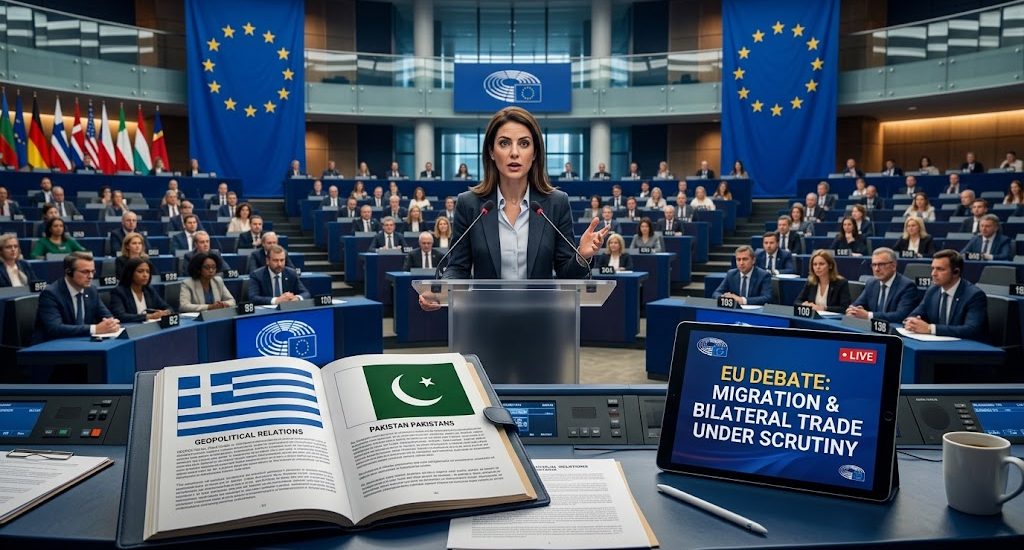
A parliamentary intervention by Greek Member of the European Parliament (MEP) Afroditi Latinopoulou, leader of the Voice of Reason (Foni Logikis) party and member of the Patriots for Europe group, has drawn international attention during debates on European Union border policy and external relations in Strasbourg.
Addressing European Commission leadership, Latinopoulou delivered remarks calling for significant adjustments to European migration enforcement and bilateral diplomatic priorities. Her address focused heavily on irregular migration routes, repatriation protocols, and the criteria governing trade frameworks between Brussels and partner countries.
Key Elements of the Address
The speech delivered in Strasbourg raised several contentious arguments regarding border governance, bilateral trade, and human rights oversight:
- Border Controls and Repatriation Protocols: Latinopoulou criticized European Commission leadership regarding the handling of unauthorized border crossings. She advocated for stricter external border enforcement across Southern Europe and called on member states to accelerate returns of undocumented migrants whose asylum claims have been formally rejected.
- External Economic and Trade Ties: The MEP argued that EU economic engagement should be strictly conditional, suggesting that trade frameworks involving countries such as Pakistan be re-evaluated against domestic governance and human rights standards.
- Human Rights Concerns: In her remarks, Latinopoulou referenced reports concerning the rights of religious minority women and girls in Pakistan—specifically allegations regarding forced conversions and underage marriages—arguing that European trade policy should account more heavily for these issues in bilateral evaluations.
- Criticism of Commission Leadership: Directly addressing European Commission President Ursula von der Leyen, Latinopoulou aligned her position with broader European right-wing factions that argue the EU’s current asylum compact does not adequately address national security or public integration concerns.
Institutional Context: The Status of EU–Pakistan Relations
While individual MEP speeches frequently reflect national political campaigns or domestic constituent messaging, official European Union foreign and trade policy is shaped collectively by the European Commission, the European External Action Service (EEAS), and the Council of the European Union.
1. The GSP+ Framework
Pakistan currently participates in the European Union’s Generalised Scheme of Preferences Plus (GSP+), a specialized trade mechanism that grants tariff-free or preferential access to European markets for the majority of Pakistani exports, particularly textiles and leather goods.
Renewal and continuation of GSP+ status are governed by ongoing biennial compliance reviews monitoring the implementation of 27 international conventions covering human rights, labor protections, environmental standards, and governance. While the European Parliament debates these reviews periodically, individual member statements do not unilaterally alter trade agreements.
2. Readmission and Migration Cooperation
The European Union and Pakistan maintain an institutional Readmission Agreement (EURA), signed to establish formal procedures for the identification, verification, and return of individuals who do not possess legal authorization to remain in EU member states. Bilateral dialogues through the EU–Pakistan Joint Readmission Committee continue to focus on operational implementation, combating human smuggling syndicates, and expanding legal pathways.
3. Rising Political Polarisation in Brussels
Latinopoulou’s statements illustrate the expanding debate within the European Parliament following recent EU elections, where conservative and right-wing political groupings have sought to shift the policy consensus toward stricter external border surveillance, third-country return hubs, and conditionality clauses linking foreign development aid to migration readmission cooperation.
📌 Diplomatic Context: Statements made during plenary debates reflect the perspectives of individual parliamentarians and their political groups. Any formal change to EU trade preferences, economic partnerships, or asylum directives requires legislative review and consensus among the European Commission, Parliament, and Member States within the European Council.