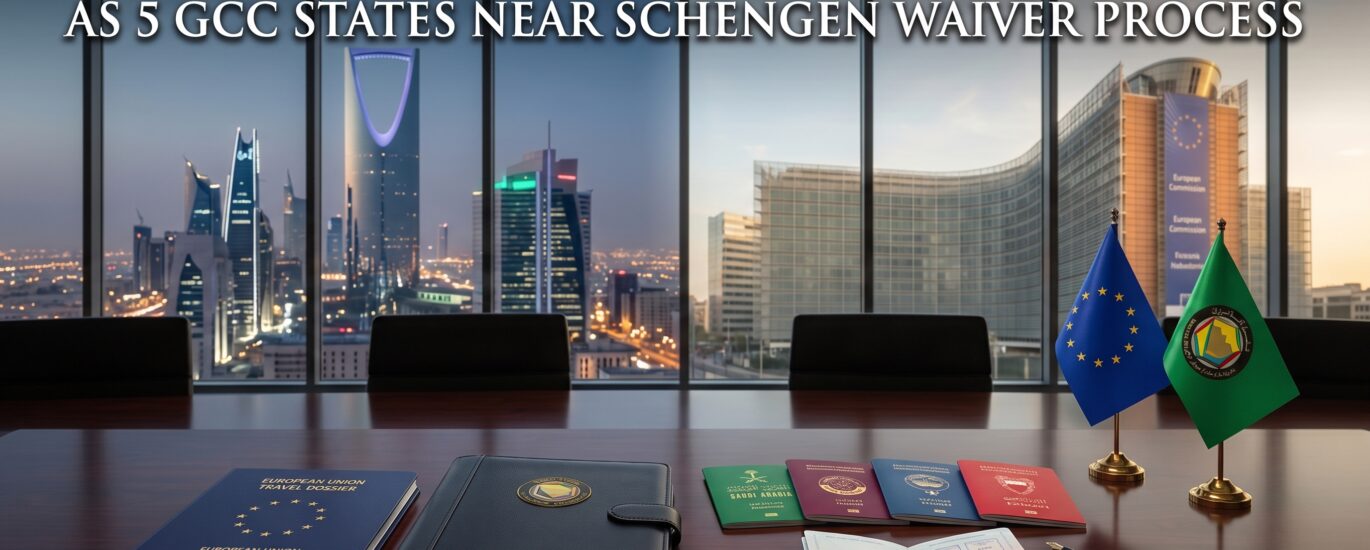
VISA-FREE EUROPE CLOSER FOR GULF CITIZENS AS 5 GCC STATES NEAR SCHENGEN WAIVER PROCESS
In a diplomatic milestone for travel mobility between the Arabian Peninsula and the European Union, citizens of five Gulf Cooperation Council (GCC) countries are approaching the formal process for short-stay visa exemptions into Europe’s 29-nation Schengen Area.
The development was confirmed by GCC Secretary-General Jasem Mohamed Al-Budaiwi, who revealed that the Gulf bloc is “very close” to initiating formal procedural steps to waive the Schengen visa requirement for nationals of Saudi Arabia, Qatar, Kuwait, Oman, and Bahrain.
Speaking ahead of the high-level second EU-GCC Summit scheduled for October 24 in Riyadh, Al-Budaiwi indicated that substantive deliverables on travel facilitations are expected to headline the bilateral agenda.
If ratified, the five nations would join the United Arab Emirates (UAE)—whose citizens have enjoyed visa-free short-stay access across the Schengen Zone since the signing of their bilateral waiver accord in 2015.
The announcement builds on incremental European Commission directives that granted standardized 5-year multiple-entry “cascade” visas to Gulf applicants.
However, transitioning to a full statutory exemption eliminates embassy appointments, third-party processing queues, and application fees entirely for Gulf tourists, business executives, and short-term visitors.
Here is an analysis of the waiver roadmap, the five beneficiary states, the timeline surrounding the Riyadh summit, and what travelers need to know.
The Five Target States: Moving Beyond the “Cascade” Visa Phase
While the UAE already holds full visa-free status, the other five GCC member nations have operated under phased European visa facilitations:
             GCC–SCHENGEN TRAVEL STATUS BREAKDOWN
 ┌─────────────────────────────────────────────────────────────┐
 │ 🇦🇪 UNITED ARAB EMIRATES (UAE)                               │
 │ • Status: FULL VISA-FREE ACCESS (Active since 2015).        │
 │ • Entry: Biometric passport entry up to 90 days / 180 days. │
 ├─────────────────────────────────────────────────────────────┤
 │ 🇸🇦 SAUDI ARABIA | 🇧🇭 BAHRAIN | 🇴🇲 OMAN                      │
 │ • Current Status: 5-year multiple-entry "Cascade" visas.    │
 │ • Target: Full bilateral short-stay Schengen visa waiver.   │
 ├─────────────────────────────────────────────────────────────┤
 │ 🇰🇼 KUWAIT | 🇶🇦 QATAR                                        │
 │ • Current Status: Harmonized multi-year Schengen rules.     │
 │ • Target: Full bilateral short-stay Schengen visa waiver.   │
 └─────────────────────────────────────────────────────────────┘
While the multi-year cascade model reduced frequent re-applications, applicants still faced administrative hurdles: filing biometric paperwork, booking outsourced appointments during peak summer holidays, and paying €90 statutory processing fees.
The upcoming waiver track seeks to remove the requirement for a physical sticker visa altogether.
The Three-Stage Legislative Pipeline to Full Visa-Free Entry
Diplomatic observers and immigration analysts emphasize that while the political intent is strong, European visa exemptions follow a formal institutional trajectory:
               THE EUROPEAN VISA-WAIVER ROADMAP
 ┌─────────────────────────────────────────────────────────────┐
 │ 🏛️ STAGE 1: POLITICAL DECLARATION (RIYADH SUMMIT)           │
 │ • Joint understanding launched at the EU-GCC Summit to      │
 │   commence formal technical and regulatory procedures.      │
 ├─────────────────────────────────────────────────────────────┤
 │ 📑 STAGE 2: EUROPEAN COMMISSION & PARLIAMENT APPROVAL       │
 │ • Legislative drafting to amend EU Regulation 2018/1806,    │
 │   moving the 5 states to the visa-exempt annex list.        │
 ├─────────────────────────────────────────────────────────────┤
 │ ✍️ STAGE 3: BILATERAL SIGNING & RATIFICATION                │
 │ • Formal bilateral waiver treaties signed and published in  │
 │   the Official Journal of the EU, entering into legal force.│
 └─────────────────────────────────────────────────────────────┘
Once fully in force, travelers will simply complete an electronic pre-travel registration (such as the upcoming European Travel Information and Authorisation System – ETIAS) before boarding direct flights to Europe.
Key Operational Benchmarks & Rules of the Exemption
| Dimension | Policy Specification / Statutory Rule |
| Target Nations | Saudi Arabia, Qatar, Kuwait, Oman, Bahrain |
| Existing Visa-Free State | United Arab Emirates (UAE) |
| Upcoming Diplomatic Venue | 2nd EU-GCC Summit in Riyadh (October 24) |
| Territorial Scope | 29 European Schengen Nations (EU members + Switzerland, Norway, Iceland, Liechtenstein) |
| Permitted Stay Duration | 90 days within any rolling 180-day window |
| Eligible Purposes | Tourism, business meetings, family visits, short conferences |
| Excluded Activities | Long-term employment, university degrees, and residency (require national D-visas) |
Economic & Commercial Impact Across Europe and the Gulf
Removing visa barriers carries reciprocal benefits for bilateral commerce, education, and investment:
- Accelerating GCC Outbound Tourism: Gulf travelers represent some of the highest-spending global visitors in Europe, directly benefiting luxury retail, hospitality, and aviation corridors in France, Italy, Germany, Spain, and Switzerland.
- Bilateral Executive Mobility: Corporate investors, sovereign wealth fund directors, and enterprise executives can travel for negotiations on short notice without consular delays.
- Strengthening Strategic Ties: Ahead of broader negotiations on clean energy, maritime security, and free-trade pacts, easing citizen mobility builds long-term goodwill between Brussels and Gulf capitals.
Travel Advisory: What Gulf Nationals Should Do Now
Because the initiative is entering its procedural launch phase, travelers should maintain practical travel plans:
- Do Not Cancel Imminent European Trips: The formal process requires technical drafting and ratification. If you plan to travel over the coming weeks or winter holidays, continue applying for standard Schengen visas normally.
- Verify Passport Validity: Exemption frameworks require biometric passports valid for at least 6 months beyond the intended departure date from the Schengen zone.
- Differentiate Short-Stay from Long-Term Stays: The waiver covers visits under the 90/180-day rule. Students undertaking full-degree courses or expatriates seeking European work contracts still require dedicated national visas.
Corporate Advisory & Cross-Border Mobility Strategy
Monitoring international visa policies, bilateral trade treaties, and diplomatic summit outcomes is essential for multinational corporations, regional developers, and family offices managing global assets. Enterprises and executives seeking strategic mobility intelligence, cross-border due diligence, and regional business positioning can collaborate with Makani Marketing.
📌 Diplomatic Protocol Notice: The commencement of visa-waiver procedures is subject to formal adoption by the European Commission, the European Parliament, and the Council of the European Union, alongside bilateral ratification with individual GCC governments. Travelers must monitor official communiqués issued by the GCC Secretariat and the European External Action Service (EEAS) for operational effective dates